

By Russell Becker, DO
 Every 40 seconds, someone in the United States has a stroke. It is the fifth leading cause of death in America and a primary driver of long-term disability. Yet many of the strokes that devastate lives each year are preventable. At the Vascular Center of Naples, we believe that knowledge is one of the most powerful tools in stroke prevention — and that starts with understanding carotid artery disease.
What Is Carotid Artery Disease?
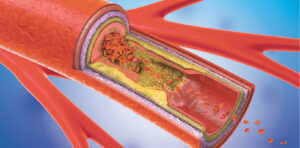
The carotid arteries are two large blood vessels that run along either side of your neck, supplying oxygen-rich blood to your brain. When plaque — a buildup of fat, cholesterol, and other substances — accumulates along the walls of these arteries, the condition is known as carotid artery disease, or carotid artery stenosis.
Over time, this plaque can narrow the arteries and restrict blood flow to the brain. Worse, pieces of plaque can break off and travel to smaller vessels in the brain, causing a blockage — and a stroke.
Why It Is Called a “Silent” Disease
One of the most dangerous aspects of carotid artery disease is that it often produces no symptoms in its early stages. Many patients have significant narrowing of their carotid arteries without ever feeling a thing. This is why the disease is so often called a silent threat.
In some cases, a transient ischemic attack (TIA) — commonly called a “mini-stroke” — serves as the first warning sign. Symptoms of a TIA may include sudden numbness or weakness on one side of the body, trouble speaking or understanding speech, temporary vision loss, dizziness, or loss of coordination. A TIA typically resolves within minutes to hours but should be treated as a medical emergency. It is often a precursor to a full stroke and demands immediate evaluation.
Who Is at Risk?
Carotid artery disease shares many of the same risk factors as other cardiovascular conditions. You may be at increased risk if you:
• Are over the age of 65
• Have a history of high blood pressure (hypertension)
• Smoke or have a history of tobacco use
• Have high cholesterol or triglyceride levels
• Live with diabetes
• Are overweight or physically inactive
• Have a personal or family history of heart disease
or stroke
Men are slightly more likely to develop carotid disease, though women who have the disease often face worse outcomes following a stroke.
Diagnosis and Screening
Because carotid artery disease frequently has no symptoms, screening plays a critical role in detection. At the Vascular Center of Naples, our specialists use carotid duplex ultrasound — a painless, noninvasive imaging test — to evaluate blood flow through the carotid arteries and detect any narrowing or plaque buildup. This simple test can be life-saving, particularly for patients with multiple risk factors.
If significant narrowing is detected, additional imaging such as CT angiography or MR angiography may be recommended to get a more complete picture of the vascular anatomy before determining the best course of treatment.
Treatment Options
Treatment for carotid artery disease depends on the severity of the narrowing and the patient’s overall health. Mild to moderate disease is often managed with lifestyle modifications — including a heart-healthy diet, regular exercise, smoking cessation, and blood pressure control — along with medications such as statins and antiplatelet agents.
For patients with more advanced stenosis, especially those who have already experienced a TIA or stroke, procedural intervention may be necessary.
Carotid endarterectomy (CEA) — a surgical procedure to remove plaque from the artery — remains the gold standard for many patients. Carotid artery stenting (CAS) is a minimally invasive alternative that may be appropriate for certain individuals who are not ideal surgical candidates.
Our team at the Vascular Center of Naples individualizes every treatment plan based on each patient’s unique anatomy, medical history, and risk profile. We take a collaborative approach, working closely with referring physicians and neurologists to ensure seamless, comprehensive care.
Take Action This Stroke Awareness Month
Stroke is largely preventable when risk factors are identified and managed early. This May, we encourage anyone with cardiovascular risk factors — or anyone over 65 — to speak with their doctor about carotid artery screening. Early detection can mean the difference between a full life and a devastating neurological event.
At the Vascular Center of Naples, our board-certified vascular surgeons are dedicated to protecting the vascular health of our community. If you or a loved one has risk factors for carotid artery disease, do not wait for symptoms to appear. Schedule a consultation today and take the first step toward a healthier, stroke-free future.
It’s no stretch to say that Russell Becker, DO, a fellow-trained vascular surgeon practicing at Vascular Center of Naples in Naples, Florida, gets into things for the long run. Dr. Becker, who runs marathons in his free time, has experience and interest in all areas of vascular and endovascular surgery, including treatment of conditions like carotid artery disease, hemodialysis access creation and maintenance, and diseases of the veins.
1875 Veterans Park Dr. Suite 2203
Naples, FL 34109
239-431-5884
www.VascularCenterNaples.com