

By Russell Becker, DO
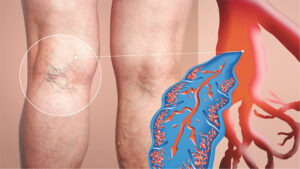 If you frequently experience heavy, aching legs, swollen ankles, or unsightly varicose veins, you may be living with chronic venous insufficiency (CVI). This common yet often underdiagnosed vascular condition affects millions of Americans, reducing quality of life and, when left untreated, leading to serious complications. At Vascular Center of Naples, our dedicated team of vascular specialists provides comprehensive, compassionate care to help patients understand and manage venous insufficiency at every stage.
What Is Venous Insufficiency?
Venous insufficiency occurs when the valves inside the veins of the legs stop functioning properly. Normally, these one-way valves open to allow blood to flow upward toward the heart and then close to prevent it from falling back down. When the valves become weak or damaged, blood pools in the lower legs, a process known as reflux. This buildup of pressure strains the vein walls, causing them to stretch and bulge, and over time results in the symptoms that many patients recognize as varicose veins or leg discomfort.
Venous insufficiency is not merely a cosmetic concern. It is a progressive circulatory disorder that can worsen significantly without treatment. The condition ranges from mild spider veins to advanced stages involving chronic skin changes and venous ulcers that are difficult to heal.
Common Symptoms to Watch For
Because venous insufficiency develops gradually, symptoms can be easy to dismiss as normal signs of aging or fatigue. However, persistent or worsening symptoms should always be evaluated by a vascular specialist. The most common signs include aching, heaviness, or cramping in the legs, particularly after prolonged sitting or standing. Patients also often notice swelling around the ankles and feet that tends to worsen throughout the day. Varicose veins — twisted, rope-like veins visible just beneath the skin — are another hallmark sign. As the condition advances, some individuals develop skin discoloration or thickening around the lower legs and ankles, itching or irritation over affected veins, and in severe cases, open sores called venous ulcers that form near the ankles and are slow to heal.
Who Is at Risk?
Several factors increase the likelihood of developing venous insufficiency. Age plays a significant role, as vein valves naturally weaken over time. A family history of varicose veins or venous disease raises risk considerably, suggesting a strong genetic component. Women are more frequently affected than men, in part due to hormonal changes associated with pregnancy and menopause. Pregnancy itself places increased pressure on leg veins, and multiple pregnancies can compound that effect over time. Occupations requiring long periods of sitting or standing — such as healthcare workers, teachers, and office professionals — also contribute to venous disease. Obesity, prior blood clots, and a sedentary lifestyle round out the most common risk factors.
Diagnosis and Treatment at Vascular Center of Naples
At Vascular Center of Naples, diagnosis begins with a thorough medical history and physical examination. A duplex ultrasound — a non-invasive imaging study — is then used to map the venous system in detail, identifying any reflux or obstruction. This painless test gives our specialists a clear picture of how blood is flowing and where treatment is needed most.
Treatment plans are individualized based on the severity of the condition and the patient’s goals. Conservative management, including compression stockings, leg elevation, and regular physical activity, is often the first line of treatment for mild cases. For patients with more significant venous disease, our team offers a range of minimally invasive procedures. Endovenous laser ablation and radiofrequency ablation use heat energy delivered through a thin catheter to close diseased veins with minimal discomfort and a quick recovery. Sclerotherapy involves injecting a solution directly into affected veins, causing them to collapse and fade. Microphlebectomy is an option for removing larger surface varicosities through tiny incisions that require no stitches.
Why Early Treatment Matters
Venous insufficiency is a progressive disease, and waiting too long to seek care can lead to complications that are far more difficult to treat. Chronic inflammation, skin breakdown, and non-healing ulcers can significantly impair mobility and independence. Early intervention not only relieves symptoms and improves appearance but also prevents the disease from advancing to these more serious stages.
Schedule Your Evaluation Today
You do not have to live with the discomfort and worry that venous insufficiency brings. The experienced vascular team at Vascular Center of Naples is here to provide expert evaluation, accurate diagnosis, and effective treatment tailored to your needs. Whether you are just beginning to notice symptoms or have been struggling for years, we are committed to helping you regain healthy circulation and improve your quality of life. Contact us today at 239-431-5884 to schedule a consultation and take the first step toward healthier veins.
It’s no stretch to say that Russell Becker, DO, a fellow-trained vascular surgeon practicing at Vascular Center of Naples in Naples, Florida, gets into things for the long run. Dr. Becker, who runs marathons in his free time, has experience and interest in all areas of vascular and endovascular surgery, including treatment of conditions like carotid artery disease, hemodialysis access creation and maintenance, and diseases of the veins.
1875 Veterans Park Dr. Suite 2203
Naples, FL 34109
239-431-5884
www.VascularCenterNaples.com