

By Jerry and Lisa Meloche, Pharm.D., Owners, Compounding Pharmacists
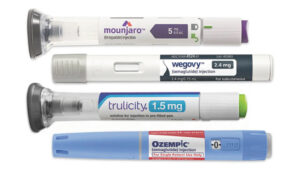 President Trump’s recent announcement establishing negotiated, lower prices for several GLP-1 medications represents a meaningful change in how these drugs may be accessed and paid for by people on federal coverage. The agreements with Eli Lilly and Novo Nordisk are aimed at lowering the out-of-pocket cost of commonly prescribed GLP-1 agents (examples: semaglutide — brand names Ozempic, Wegovy; tirzepatide — brand name Zepbound/Mounjaro) and expanding coverage for selected clinical indications. The White House fact sheet and related administration briefings state that the negotiated pricing will enable new Medicare coverage for certain anti-obesity GLP-1 products and provide substantially reduced monthly prices for Medicare beneficiaries. The White House
How the program works, in plain terms: the federal government negotiated lower prices with manufacturers and will make those negotiated prices available to Medicare (and, via separate arrangements, to Medicaid under pilot programs). The reduced government purchase prices allow plans to translate lower wholesale costs into much smaller beneficiary copayments. Administration briefings have described beneficiary copays as low as $50 per month for qualifying Medicare enrollees under the announced deal framework, and government purchase prices of roughly $245 per month for certain formulations — figures the companies and administration report will apply when the program becomes operative. In addition, the White House announced a public purchasing portal (referred to as “TrumpRx”) that will offer manufacturer-discounted cash prices for people without insurance or whose plans do not cover these drugs. The Washington Post+1
Who is included? The initial descriptions from the administration indicate coverage expansion to Medicare beneficiaries who meet clinical criteria related to obesity and related comorbid conditions (for example, obesity with cardiovascular risk factors, diabetes, or pre-diabetes where the GLP-1 drug is indicated). The agreements list semaglutide and tirzepatide among the GLP-1 therapies targeted; other agents and doses may be added later depending on FDA approvals and manufacturer participation. The administration has said roughly 10% of Medicare enrollees could become newly eligible for coverage of these agents under the announced terms, based on enrollment and utilization estimates cited by officials. The White House+1
When does it start — nationally and for Florida? Administration materials and press coverage identify “mid-2026” as the expected window for Medicare coverage under the negotiated prices and indicate some Medicaid pilot activity beginning in 2027. Because Medicare is a federal program, any new Medicare coverage and negotiated price terms will apply to Medicare beneficiaries in all states, including Florida, once implemented. That said, Medicaid is administered at the state level; the White House has described pilot or phased Medicaid expansions beginning later, and state Medicaid programs (including Florida’s Agency for Health Care Administration) will determine how and when to add specific drugs to their formularies or preferred drug lists. As of this writing there has been no Florida-specific public adoption notice altering the Florida Medicaid PDL; Florida beneficiaries with Medicaid should monitor state AHCA announcements and contact their plan for confirmation. In short: Medicare changes will apply in Florida when federal implementation begins (mid-2026 as stated by the administration); Medicaid timing will depend on state-level adoption and any pilot programs. The Washington Post+1
Clinical context and public health impact: GLP-1 receptor agonists and related incretin-based therapies are evidence-based treatments for type 2 diabetes and, for some agents and doses, for chronic weight management. Their increased use has the potential to reduce risk factors linked with hypertension, diabetes progression, and cardiovascular disease in appropriately selected patients. This is relevant because roughly 40% of U.S. adults meet the clinical definition of obesity and more than one-third of adults have prediabetes — populations at elevated cardiometabolic risk for which GLP-1 therapy may be considered as part of a comprehensive treatment plan. Clinicians must continue to weigh benefits, risks, and cost when recommending therapy and adhere to FDA-approved indications and dose-specific safety monitoring. CDC+1
What this means for patients and prescribers:
• Patients: If you are a Medicare beneficiary in Florida (or any state) and have obesity, type 2 diabetes, or related cardiometabolic disease, ask your primary care provider or endocrinologist whether you meet the clinical criteria for GLP-1 therapy under the new coverage framework. Confirm with your Medicare Part D plan or Medicare Advantage plan about prior authorization, dosing limits, and copay estimates once the program goes into effect. For Medicaid enrollees, check with your state plan for specific formulary or pilot inclusion. The White House
• Prescribers and pharmacists: Review forthcoming Medicare guidance and manufacturer participation notices; be prepared for increased prior-authorization requests and documentation of indication (BMI, comorbidities, prior therapy). Compounding pharmacies should continue to counsel patients on approved uses, potential adverse effects (e.g., gastrointestinal symptoms, rare risk of pancreatitis), and the importance of clinician supervision when initiating or titrating GLP-1 agents.
Next steps for readers: Coverage details and eligibility criteria are evolving. Patients should not self-initiate GLP-1 therapy without clinical evaluation. Contact your medical provider to discuss whether GLP-1 therapy is clinically appropriate for you, confirm expected copays with your prescription drug plan, and ask your pharmacist about program changes and manufacturer programs that may affect out-of-pocket cost.
Compounding Pharmacists
239-261-0050
600 Goodlette Road North #108
Naples, FL 34102
www.creativescripts.net
References:
1. “Fact Sheet: President Donald J. Trump Announces Major Developments in Bringing Most-Favored Nation Pricing to American Patients.” The White House, 2025-11-06. The White House
2. “Trump, long fixated on ‘fat drug,’ announces deal to lower its price.” The Washington Post, 2025-11-06. The Washington Post+2The Washington Post+2
3. “Medicare to Cover GLP-1 Drugs for as Little as $50 a Month.” Investopedia, 2025. Investopedia
4. “Novo Nordisk, Lilly strike deal with Trump to slash weight-loss drug prices.” Reuters, 2025-11-06. Reuters+1
5. “Medicare, Medicaid to experiment with covering weight-loss drugs.” The Washington Post, 2025-08-01. The Washington Post+1