

By Dr. Conor Sperzel
 What Is Sciatica?
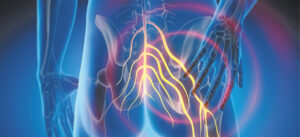
Sciatica is not a diagnosis in itself but a description of symptoms. It refers to pain that travels from the lower back or buttock down the back of the leg, following the path of the sciatic nerve. This happens when one of the nerve roots that form the sciatic nerve becomes irritated or compressed.
Patients often describe a sharp, shooting, or burning pain that can feel like an electric shock. Other common symptoms include numbness, tingling, or a pins-and-needles sensation in the leg or foot. In some cases, the affected leg may also feel weak. Symptoms usually affect one side of the body and may worsen with sitting, bending, coughing, or sneezing.
Common Causes
The most frequent cause of sciatica is a herniated disc. The discs between the vertebrae act as cushions, and when the soft inner material pushes through the tougher outer layer, it can press on or inflame a nearby nerve root.
Degenerative changes in the spine are another common source. As we age, discs lose height and hydration, and bone spurs can form, narrowing the space available for nerves. Spinal stenosis, a narrowing of the spinal canal or the openings where nerves exit, can also compress the nerve roots and produce leg pain, especially when standing or walking.
Because several conditions can produce similar symptoms, identifying the underlying cause is essential. A thorough history, physical examination, and imaging such as an MRI when appropriate help pinpoint the source of the problem and guide the right treatment.
When to Seek Treatment
Mild sciatica often improves within a few weeks with rest, activity modification, and over-the-
counter medication. However, you should see a spine specialist if your pain persists beyond several weeks, keeps getting worse, or interferes with sleep, work, or daily activities. Increasing numbness or weakness in the leg also warrants evaluation.
Some symptoms require urgent medical attention. Seek care right away if you experience loss of bladder or bowel control, numbness in the groin or inner thighs, rapidly progressing leg weakness, or sciatica accompanied by fever or following a significant injury. These can signal serious nerve compression that needs immediate treatment.
Treatment Options
Most patients begin with conservative care. This may include anti-inflammatory medications, physical therapy focused on core strength and flexibility, heat or ice, and staying gently active rather than resting in bed. These measures help many people recover fully.
When pain does not respond adequately, minimally invasive treatments can provide meaningful relief. Epidural steroid injections are one of the most effective options. Using imaging guidance, a small amount of anti-inflammatory medication is delivered directly to the area around the irritated nerve root. This reduces inflammation, eases pain, and often allows patients to participate more fully in physical therapy and return to normal activities. The procedure is performed on an outpatient basis and typically takes only a few minutes.
Takeaway
The good news is that most cases of sciatica improve without surgery. The key is an accurate diagnosis, because understanding what is irritating the nerve allows us to choose the most effective treatment for each patient. If leg pain is limiting your life, a spine specialist can help you find relief and get back to the activities you enjoy.
Dr. Conor Sperzel is a Harvard-fellowship-trained Interventional Pain Management physician and founder of Vanguard Spine and Pain in Naples, FL. His background in Physiatry (Rehabilitation Medicine) shapes his approach to interventional pain care. Rather than focusing on pain alone, he emphasizes restoring function and helping patients return to the activities that matter most to them. He treats a wide range of conditions including sciatica, neck and back pain, arthritis-related pain, and other musculoskeletal and nerve disorders using precise, minimally invasive techniques performed in an outpatient setting. His practice emphasizes individualized care, detailed functional evaluation, and timely access to treatment.
239-331-7732
www.vanguardpainfl.com
720 Goodlette-Frank, Rd Suite 204
Naples FL, 34102