

By Dr. Waldo Amadeo
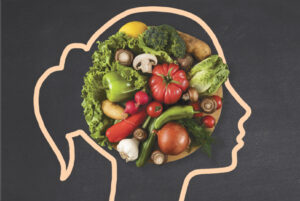 March is both National Nutrition Month and Brain Injury Awareness Month — a meaningful overlap that invites us to look at how what we eat affects how the brain heals.
When most people think about recovering from a traumatic brain injury (TBI), concussion, or acquired brain injury, they picture physical therapy, rest, and time. What often gets overlooked is the biochemical environment in which healing either thrives or stalls. Emerging research suggests that inflammation, mitochondrial function, gut health, and autonomic nervous system regulation are just as central to recovery as the structural injury itself.
Brain injury isn’t just a mechanical event. It sets off a cascade — and that cascade can be influenced.
What Happens Inside the Brain After Injury
In the hours and days following a brain injury, a predictable sequence of secondary damage unfolds: brain cells become overexcited, oxidative stress increases, mitochondria begin to malfunction, the blood-brain barrier weakens, and widespread inflammation sets in.
One of the most significant consequences is a disruption in how the brain uses energy. Cerebral glucose metabolism can remain impaired for weeks or months after injury. This creates a frustrating paradox: the brain needs more energy to repair itself, but becomes less efficient at using its primary fuel source.
When mitochondria aren’t functioning well, cells shift to less efficient energy pathways, generating more damaging byproducts and feeding the inflammatory cycle. Clinically, this shows up as fatigue, slowed thinking, mood swings, sleep problems, and difficulty with focus — symptoms that can persist long after the initial injury.
Why Nutrition Matters More Than You Think
Therapeutic nutrition for brain injury recovery isn’t about counting calories. It’s about providing the right molecular inputs to support cellular repair, reduce inflammation, and restore metabolic balance.
Several nutritional factors are particularly relevant:
. Protein serves as the raw material for neurotransmitter production. Amino acids like tryptophan (a precursor to serotonin) and tyrosine (a precursor to dopamine) are essential for mood stability and cognitive function. Low protein intake can quietly undermine recovery.
. Omega-3 fatty acids, particularly DHA, are structural components of neuronal membranes. Research suggests omega-3 supplementation may reduce neuroinflammation and support the brain’s ability to rewire itself — a process called synaptic plasticity.
. Micronutrients including zinc, magnesium, B-vitamins, and vitamin D all play roles in mitochondrial function and immune regulation. Subclinical deficiencies — ones that don’t show up as obvious symptoms — can quietly slow the recovery trajectory.
. Blood sugar stability is often underestimated. Spikes and crashes in blood glucose drive neuroinflammation and stimulate the stress response. Consistent, protein-anchored meals help keep cortisol in check and support nervous system balance.
. Gut health rounds out the picture. Brain injury has been linked to changes in gut permeability and microbiome shifts. When the gut lining becomes compromised, systemic inflammation increases — and that inflammation feeds back into the brain through the gut-brain axis.
The Autonomic Nervous System: A Hidden Variable
Many people recovering from brain injuries live in a state of chronic sympathetic activation — a nervous system stuck in “fight or flight.” This shows up as elevated heart rate, anxiety, irritability, poor sleep, and a low threshold for stress.
This happens partly because the vagus nerve, the body’s primary parasympathetic pathway, becomes dysregulated after injury. The vagus nerve also helps dampen inflammation. When vagal tone is low, that protective effect is diminished. Breathing techniques, sensorimotor rehabilitation, and neuromodulation are increasingly used to help restore it.
Neuromodulation and Putting It All Together
The prefrontal cortex — which governs decision-making, emotional regulation, and executive function — is particularly vulnerable in brain injury. Non-invasive neuromodulation technologies targeting this region show promise in restoring balance between the brain’s emotional and regulatory networks. Evidence suggests these tools work best alongside metabolic support, improved sleep, and rehabilitation, not as a standalone fix.
Recovery from brain injury rarely follows a straight line. A systems-based approach addresses multiple layers at once: reducing inflammation through nutrition, supporting mitochondrial function, stabilizing the autonomic nervous system, and enhancing neuroplasticity through targeted therapies.
As we mark both National Nutrition Month and Brain Injury Awareness Month, the message is this: food is molecular information. The brain is a metabolic organ. When we treat recovery as a systems challenge rather than a purely structural one, we give the brain a genuine chance to heal.
About the Author
Dr. Waldo Amadeo is a chiropractic physician with advanced training in functional neurology and integrative brain-based care. In his practice, Heal Thyself Institute in Naples, Florida, he specializes in complex neurological conditions, brain injury recovery, and nervous system regulation. His approach integrates structural rehabilitation, neuromodulation, and metabolic strategies to support long-term neurological resilience.
239-955-1355
2590 Northbrooke Plaza Dr. Ste 107
Naples, FL 34119
healthyselfswfl.com