

By RICK WEBER
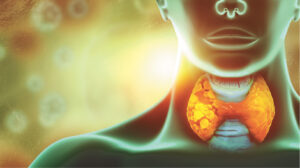 An estimated 20 million Americans are affected by thyroid disease. But how many have it and don’t know it?
Too many, according to Mark Monzone, Assistant Professor and Clinical Director in the Physician Assistant Program at Florida Gulf Coast University’s Marieb College of Health & Human Services. The American Thyroid Association (ATA) has tried to quantify it, saying up to 60% of people with thyroid disease are unaware of their condition.
“I currently work in Urgent Care, and a large population of the patients do not have a Primary Care Provider (PCP) and have not had bloodwork performed in years,” Monzone says. “It is these patients that will often go undiagnosed with thyroid function problems, and the importance of routine yearly medical workup by a PCP would be the most important point of awareness needed when it comes to thyroid function.
“This is why it is key to talk to your PCP about all of your symptoms, even those that you think are not important. The general population should understand the importance of checking your thyroid, because often treatment of thyroid disease is simple and can often improve a patient’s quality of life.”
Undiagnosed thyroid disease could put patients at risk for serious conditions such as cardiovascular diseases, osteoporosis and infertility.
To check your thyroid, your provider will likely touch or palpate your neck to ensure the gland is not enlarged. If any nodules, lumps, masses or an enlarged thyroid are felt, then that patient should get an ultrasound to evaluate the thyroid to determine if there are any concerning findings for possible thyroid cancer.
Typically, the first laboratory test ordered is for the thyroid-stimulating hormone (TSH). This hormone, produced by the pituitary gland in your brain, signals an “on/off” mechanism of the thyroid gland. If this is abnormal, further studies may be necessary.
The thyroid gland is located in the anterior neck, directly midline. This gland release hormones that help to regulate your body in many ways, but most importantly it regulates your metabolism, which determines how your body uses energy. The hormones released by the thyroid can affect your metabolism, heart rate, breathing, body temperature, digestion, mental activity, skin and bone health, fertility and rate of wound healing.
The thyroid gland is sometimes misunderstood because lab values can be misleading to a patient. A high TSH is an indicator of possible hypothyroidism (underactive or low-functioning thyroid) and a low TSH can be an indicator for possible hyperthyroidism (overactive or high-functioning thyroid).
“This confuses some patients, because they typically interpret a lab as ‘high’ to mean that you have too much or overactive amount—but with TSH, it is interpreted as the opposite,” Monzone says.
Hypothyroidism has the following common symptoms: weight gain, fatigue, dry skin, depression, mental fog, constipation, feeling cold, hair loss and muscle aches. If the TSH is elevated, then a second blood test—a Free T4—is needed to confirm the level of function for the thyroid. If the thyroid is underactive, then the TSH is elevated and the Free T4 is decreased. Hypothyroidism is treated with synthetic thyroid hormone, levothyroxine, taken daily.
Hyperthyroidism has the following common symptoms: weight loss, palpitations/rapid heart rate, anxiety, tremors, feeling hot, diarrhea/frequent bowel movements, and sometimes bulging eyes.
Labs will show a TSH that is low or decreased, and another thyroid test known as T3 will be high/elevated. Free T4 can often be elevated as well but is less accurate with hyperthyroidism than T3 is.
Hyperthyroidism is treated with a combination of medications, but medical management of hyperthyroidism does not work consistently for many patients. The next two options for treatment:
. Radioactive iodine. This destroys thyroid cells, which in turn makes the thyroid inactive. There are side effects that should be discussed with an endocrinologist prior to deciding to undergo this treatment.
. Surgery (thyroidectomy). It is the best and most definitive option for treatment, if deemed appropriate for that specific patient based off their other health history.
Eighty percent of thyroid cancer is papillary thyroid carcinoma, which has a near-99% survival rate. The best treatment for thyroid cancer is removal of the thyroid via thyroidectomy.
“There are risks with thyroid surgery, but they are typically very low if the procedure is performed by a surgeon familiar with the surgery who performs them weekly,” Monzone says. “As they say, ‘The more you do something, the better you get.’
“After a thyroidectomy, you would no longer have a thyroid, so you would have no further thyroid hormones. This essentially would cause you to become very hypothyroid, and to avoid the hypothyroid symptoms and to balance/regulate your body; you would be placed on levothyroxine, which you would take each morning. If taken appropriately, it would replace all thyroid hormones for your body and make it seem like you had a perfectly functioning thyroid.”
Thyroid problems are most likely to affect women or anyone over the age of 60. Women are five to eight times more likely than men to have thyroid problems and one woman in eight will develop a thyroid disorder during her lifetime, according to the ATA.
The risk increases for those with a family history of thyroid disorders or those with an autoimmune disease, especially pernicious anemia, Type 1 diabetes, Celiac disease, Addison’s disease, lupus, rheumatoid arthritis or Sjogren’s disease.
FGCU
Marieb College of Health & Human Services
10501 FGCU Boulevard South
Fort Myers, FL 33965
(239) 590-1000 | fgcu.edu