

By Cassie Calwell
 September is National Falls Prevention Awareness Month, an important reminder that falling is not an inevitable part of getting older. In fact, many of the factors that increase the risk of a fall can be addressed with simple changes to your daily routine.
More than one in four adults age 65 and older reports falling each year, according to the Centers for Disease Control and Prevention. Falls can result in broken bones, head injuries and a loss of independence, but the good news is there are steps older adults can take to reduce their risk.
Build Strength and Balance
Regular physical activity is one of the most important tools for fall prevention. Exercises that strengthen the legs and improve balance and flexibility can make everyday movements such as getting out of a chair or stepping off a curb safer and easier.
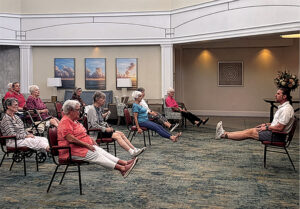
At The Carlisle Naples, an active retirement community, residents have access to a wealth of fitness and wellness classes, including Balance University, taught by Chris Williams. The weekly class attracts approximately 30 to 40 residents and focuses on strength, posture, flexibility and balance.
One concept Williams incorporates into his classes is recognizing what he calls “thresholds.” Through repeated exercises, participants learn to recognize subtle changes in their body like a shift in weight, and practice how to safely react. The repetition helps develop muscle memory so the body is better prepared to respond should a slip or fall occur.
Keep Moving
You don’t have to take a formal class to improve balance. Walking, stretching and exercises that strengthen the legs can all help improve stability. The CDC recommends that older adults incorporate aerobic activity, muscle strengthening and balance activities into their regular routines.
The key is consistency. Start at a level that is appropriate for your abilities and gradually build from there. If you’re unsure which exercises are safe for you, talk with your healthcare provider or a physical therapist before beginning a new routine.
At The Carlisle, residents who need additional support also have access to EmpowerMe Wellness, which provides on-site physical, occupational and speech therapy. Physical and occupational therapists can help identify challenges with strength, gait, mobility or everyday tasks and develop strategies to help individuals remain as safe and independent as possible.
Look Around Your Home
Exercise is only part of fall prevention. Your surroundings matter, too.
Take a walk through your home and look at it with fresh eyes. Are there throw rugs that could cause a slip? Electrical cords crossing walkways? Clutter on the floor? Is there enough lighting between the bedroom and bathroom at night?
Simple changes can make a difference. Keep pathways clear, improve lighting, add handrails where needed and use grab bars in bathrooms. Wear well-fitting shoes with good traction rather than walking in socks or loose-fitting slippers.
Don’t Overlook Your Health
Changes in vision, certain medications and some health conditions can also affect balance. Have your eyes checked regularly and talk with your doctor or pharmacist about medications that may cause dizziness or drowsiness. If you’ve already fallen, feel unsteady when walking or find yourself worrying about falling, share those concerns with your healthcare provider.
Fear of falling can sometimes cause people to become less active. Unfortunately, reducing activity can lead to weaker muscles and poorer balance, potentially increasing fall risk even more. Instead, focus on building confidence safely.
Practice Today to Protect Tomorrow
Fall prevention isn’t about limiting what you do. It’s about maintaining the strength and confidence to continue doing the things you enjoy.
Whether it’s joining a balance or fitness class, taking a daily walk, making your home safer or talking with a healthcare professional about your individual risk factors, small preventive steps can add up.
As Williams teaches residents at The Carlisle, learning to recognize how your body moves and responds takes practice. By strengthening the body, paying attention to your surroundings and addressing potential risks before a fall occurs, you can take an active role in protecting your mobility and your independence.
Located at 6945 Carlisle Court in Naples, The Carlisle offers independent and assisted living lifestyles featuring spacious one-and two-bedroom residences, housekeeping, maintenance, transportation, all utilities except telephone, Zest wellness programming and elevated dining with daily, chef-prepared specials. The community is ECC licensed with an integrated health care clinic and rehabilitative therapies located onsite. The Carlisle Naples is accredited by the National Commission on Accreditation of Rehabilitation Facilities (CARF), an important distinction that provides residents with the assurance that the highest standards of quality care, services and safeguards are maintained. For more information about the community, please call 239-221-0017 or visit www.TheCarlisleNaples.com.
The Carlisle Naples
Luxury Rental Retirement Living
6945 Carlisle Court, Naples, FL 34109
239-221-0017 . www.TheCarlisleNaples.com